Jump to HeaderJump to Main ContentJump to Footer
Michigan State University
Department of Psychology
  • Directory
  • Give
  • Login

College of Social Science

Department of Psychology

  • Academics
    • Overview
    • Undergraduate
    • Graduate
    • Adolescent Diversion Program
    • Advising
    sona-participation-photo1

    HPR/SONA Participation

    Participate in psychology research!
  • |
  • Research
    • Overview
    • Clinical Science
    • Cognition and Cognitive Neuroscience
    • Social / Personality Psychology
    • Behavioral Neuroscience
    • Organizational Psychology
    • Ecological-Community Psychology
    • Work and Organizational Psychology
  • |
  • News
  • |
  • Events
  • |
  • About
    • Overview
    • Message from the Chair
    • Access, opportunity, and excellence
    • Our Facilities
    • Contact
    merch-web2

    Visit our online store

    Shop Today!
  • |
  • Directory
  • |
  • Clinic
    • Overview
    • About
    • Clinical Staff
    • Administrative Staff
    • Resources
    • Online Bill Payment
    • Support the Clinic
    MSU Psych Clinic

    Ready to get started?

    Make an Appointment
Department of Psychology

College of Social Science

  • Academics
  • Research
  • News
  • Events
  • About
  • Directory
  • Clinic

< Academics

  • Overview
  • Undergraduate
  • Graduate
  • Adolescent Diversion Program
  • Advising
sona-participation-photo1

HPR/SONA Participation

Participate in psychology research!

< Research

  • Overview
  • Clinical Science
  • Cognition and Cognitive Neuroscience
  • Social / Personality Psychology
  • Behavioral Neuroscience
  • Organizational Psychology
  • Ecological-Community Psychology
  • Work and Organizational Psychology

< News

< Events

< About

  • Overview
  • Message from the Chair
  • Access, opportunity, and excellence
  • Our Facilities
  • Contact
merch-web2

Visit our online store

Shop Today!

< Directory

< Clinic

  • Overview
  • About
  • Clinical Staff
  • Administrative Staff
  • Resources
  • Online Bill Payment
  • Support the Clinic
MSU Psych Clinic

Ready to get started?

Make an Appointment
  • Directory
  • Give
  • Login
Department of Psychology > Academics > Undergraduate >

Timeline

Timeline

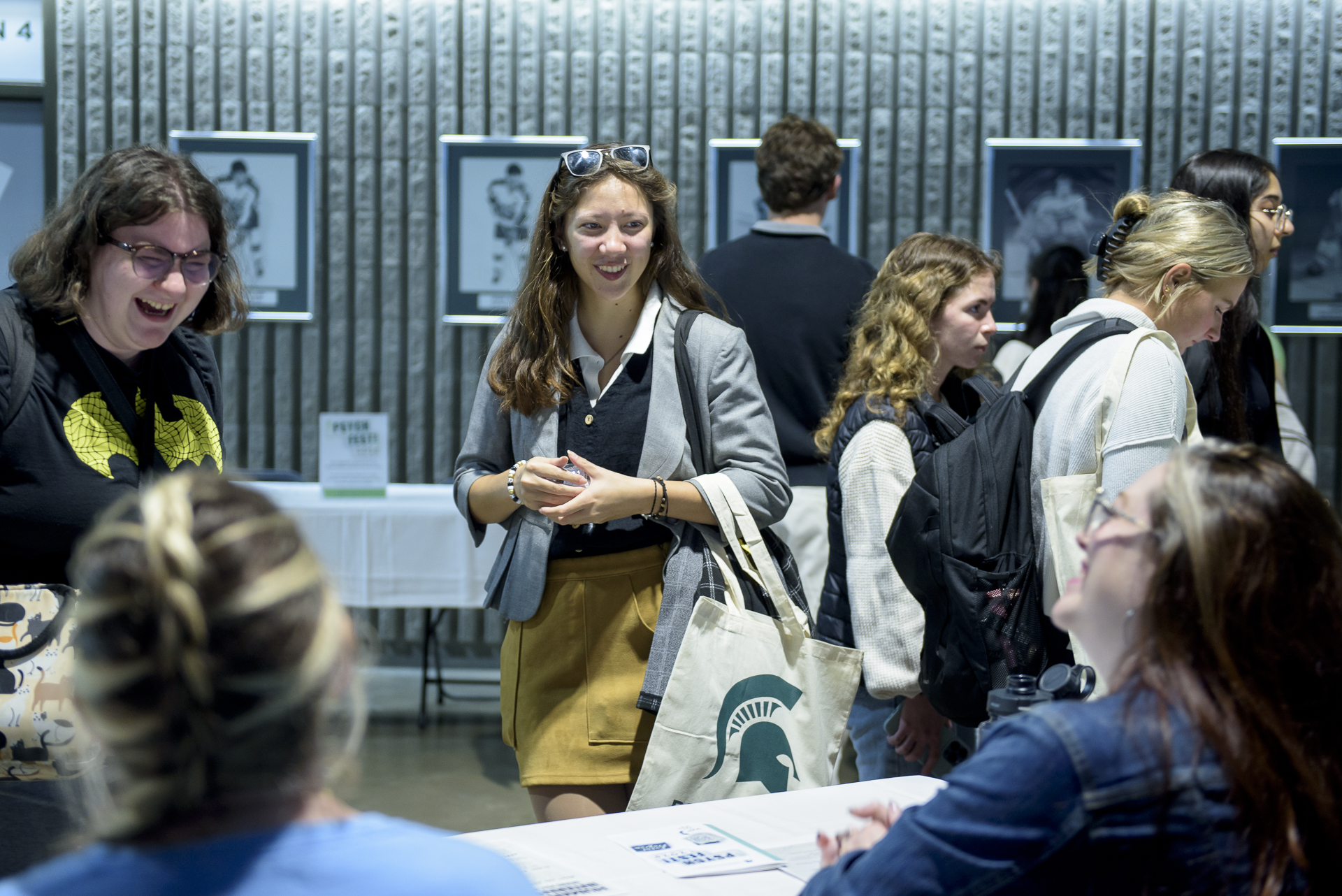
PSYCHfest-0300


College = academic + personal + professional development.

The biggest mistake we see? Waiting too long to explore careers! Waiting until senior year to “figure it out” = unnecessary stress + missed opportunities!

This Timeline helps you take small, intentional steps each year. 

We’ve organized it into 4 focus areas: 

  • Get Involved = find your people + community
  • Build Skills = strengthen academic + professional abilities
  • Explore Careers = learn what’s out there (early!)
  • Plan Next Steps = stay on track + make informed decisions

Think of this as a menu, rather than a mandate. You don’t have to check every box. However you choose to use this, just don’t ignore it until senior year!

What matters most is consistent growth and trying things sooner rather than later.

The goal is to graduate with direction, not just credits!

Academics

  • Graduate
  • Undergraduate

About

  • Access, opportunity, and excellence
  • Message from the Chair
  • Directory
  • Our Facilities
  • Give

Research

  • Behavioral Neuroscience
  • Clinical Science
  • Cognition & Cognitive Neuroscience
  • Ecological / Community Psychology
  • Organizational Psychology
  • Social / Personality Psychology
  • Work and Organizational Psychology

Clinic

  • About
  • Administrative Staff
  • Clinical Staff
  • Resources
  • Getting Started
  • Online Bill Payment

News & Events

  • News
  • Events

Contact us

(517) 355-9562

Address

Department of Psychology Michigan State University Psychology Building 316 Physics Rd, East Lansing, MI 48824

Follow Us

  • Visit our Facebook page
  • Visit our page on X
  • Visit our Instagram page
  • Visit our LinkedIn page
  • Visit our YouTube page

If you're having accessibility issues, please let us know.

Know More: Campus Safety Information and ResourcesTransparency Reporting: Budget & Salary/Compensation
  • Contact Information|
  • Site Map|
  • Privacy Statement|
  • Site Accessibility|
  • Call MSU: (517) 355-1855|
  • Visit: msu.edu|
  • Notice of Nondiscrimination|

SPARTANS WILL|© Michigan State University|

Year One

Get Involved

  • Attend Fall Welcome events and Sparticipation to discover communities, explore interests, and reduce the “where do I belong?” feeling early on.
  • Attend a residence hall or neighborhood event to help you build early social connections with those nearest you.
  • Join 1-3 student organizations to explore identity, interests, and community
  • Go to a campus-wide event (e.g., lecture, performance, cultural event, sporting event) to expand your perspective and introduce you to campus culture beyond academics.
  • Request to be paired with a PSY Student Success Mentor to get guidance from someone who has recently navigated the same transition.
  • Attend at least one event alone to build independence and confidence navigating new spaces.
  • Introduce yourself to at least one person in each class to start building academic peer networks early.

Build Skills

  • Learn how to read and use a syllabus. These are your roadmaps for expectations, deadlines, and grading.
  • Create a weekly schedule (with classes, study time, and life tasks) to reduce stress and improve follow-through.
  • Visit tutoring services to normalize help-seeking before you “need” it.
    • Writing Center
    • Math Learning Center
    • Science Help Rooms
  • Attend an Academic Success Workshop to learn new strategies that save time and improve performance long-term.
  • Get in the habit of re-reading your notes on the same day you take them to strengthen long-term memory and reduce cramming.
  • Visit office hours at least once per professor to build relationships with faculty and confidence in your professional networking skills.
  • Find your favorite campus study space(s). Environment impacts focus more than most students realize.
  • Experiment with different study strategies (e.g., active recall, flashcards, practice tests, etc.).
  • Track how long tasks (e.g., course readings, assignments, etc.) actually take to improve future planning accuracy.

Explore Careers

  • (Fall semester) Attend PSYCHFest to learn about resources, opportunities, and career pathways.
  • (Spring semester) Attend the PSY Service and Internship Fair to get ideas of the kinds of opportunities you want to pursue.
  • Attend an Experiential Learning Series info session to learn more about how to get involved in opportunities that interest you.
  • Attend a Career Service Network fair or event to begin learning about how employers talk about skills.
  • Start a basic resume to capture experiences before you forget them.
  • Create a LinkedIn profile to start building a professional identity and network.
  • Browse job postings related to PSY to learn what skills employers expect.

Plan your Next Steps

  • Explore potential minors or secondary interests.
  • Meet with your PSY advisor at least once per semester to stay informed and on track.
  • Explore summer options (classes, work, and volunteering).
  • Explore Undergraduate Research opportunities for fall semester.
  • Identify scholarships and their deadlines.
  • Reflect on what you enjoyed/disliked this year and use this to guide future decisions.
  • Use NACE Core Competencies to assess your development in areas such as communication, teamwork, leadership, and professionalism, and set goals for continued growth.
  • Set 2–3 goals for Year Two.
Year Two

Get Involved

  • Stay active in 1–2 organizations. Depth of involvement matters more than quantity, and sustained engagement helps you build meaningful relationships, reliability, and a sense of belonging within a community.
  • Take on a small role (committee, event help, etc.) to begin developing leadership, teamwork, and professionalism in low-risk, supportive environments.
  • Participate in Spartan traditions to strengthen your connection to the university and build shared experiences that contribute to long-term belonging and engagement.
  • Explore off-campus or community-based involvement to apply your interests in real-world contexts and begin connecting academic learning to broader social impact.
  • Start thinking about leadership roles for next year so you can intentionally position yourself for growth and increased responsibility.
  • Attend organization meetings consistently. Showing up regularly builds your reputation, accountability, and dependability—key components of professionalism.
  • Volunteer for event planning or coordination to gain hands-on experience with teamwork, organization, and problem-solving.

Build Skills

  • Refine your time management strategies as coursework becomes more demanding. Strong time management supports productivity, reduces stress, and improves overall academic performance.
  • Attend office hours more regularly to deepen your understanding of course material while also building relationships with faculty who may later serve as mentors or recommenders.
  • Begin documenting accomplishments (projects, presentations, leadership, work experience) so you have a running record of your growth and achievements.
  • Start using a task management system to organize short- and long-term responsibilities, helping you manage competing priorities more effectively.
  • Seek feedback on your writing to strengthen a critical academic and professional skill that is highly valued across industries.
  • Practice verbal communication skills through class participation, presentations, or group work to build confidence and clarity in expressing ideas.

Explore Careers

  • (Fall semester) Attend PSYCHFest prepared to network by asking questions, introducing yourself, and beginning to practice professional communication.
  • (Spring semester) Attend the PSY Service and Internship Fair prepared to engage with organizations and learn about opportunities that align with your interests.
  • Conduct informational interviews or shadow professionals (when possible) to gain insight into career paths and day-to-day responsibilities.
  • Continue building your LinkedIn profile by adding experiences, skills, and connections to strengthen your professional presence.
  • Update and refine your resume to reflect new experiences, focusing on transferable skills such as communication, teamwork, and problem-solving.
  • Attend graduate school information sessions to understand expectations, timelines, and pathways early in the process.
  • Meet with a career advisor to explore interests, clarify goals, and receive personalized guidance on next steps.
  • Apply for part-time roles, internships, or volunteer opportunities that help you begin gaining relevant experience.

Plan your Next Steps

  • Meet with your PSY advisor to map out your remaining semesters and ensure alignment with both graduation requirements and personal goals.
  • Use NACE Core Competencies to assess your development in areas such as communication, teamwork, leadership, and professionalism, and set goals for continued growth.
  • Determine how you plan to fulfill the College of Social Science Experiential Learning requirement in a way that aligns with your interests and future plans.
  • (Fall semester) Begin researching summer internship opportunities early to increase your chances of securing competitive positions.
  • (Spring semester) Apply for summer internships to gain hands-on experience that will strengthen your resume and clarify your interests.
  • Learn about the graduate school application process so you can begin preparing intentionally rather than reactively.
  • Identify scholarships and track their deadlines to support financial planning.
  • Begin identifying potential mentors (faculty, supervisors, advisors) who can support your academic and professional growth.
  • Create a “junior year priorities” plan including 2-3 goals for Year Three. 
Year Three

Get Involved

  • Take on leadership roles in 1–2 organizations to demonstrate initiative, accountability, and your ability to guide others toward shared goals.
  • Maintain consistent involvement, focusing on quality over quantity, to show commitment and depth of experience.
  • Mentor or support newer students to reinforce your own learning while developing leadership, communication, and interpersonal skills.
  • Lead a project, initiative, or event to gain experience in planning, decision-making, and problem-solving.
  • Reflect on your leadership style and identify areas for growth to become a more effective and intentional leader.

Build Skills

  • Complete at least one Experiential Learning opportunity to apply academic knowledge in real-world settings and build career-relevant skills.
  • Develop leadership, communication, and project management skills through active roles and responsibilities.
  • Practice networking conversations to build confidence in professional interactions and relationship-building.
  • Take on complex academic projects that require critical thinking, analysis, and sustained effort.
  • Seek and apply feedback from supervisors, faculty, or mentors to support continuous improvement.
  • Document the outcomes and impact of your work to strengthen future resumes and applications.

Explore Careers

  • (Fall semester) Attend PSYCHFest with clear goals, such as identifying specific opportunities, making connections, or learning about targeted career paths.
  • (Spring semester) Attend the PSY Service and Internship Fair with the intention of building relationships and identifying concrete next steps.
  • Secure an internship, research role, or relevant experience that aligns with your interests and strengthens your qualifications.
  • Build relationships with professionals and mentors who can provide guidance, insight, and potential recommendations.
  • Update your resume to emphasize impact, outcomes, and skill development rather than just responsibilities.
  • If considering graduate school
    • Create or refine a CV (different from a traditional job resume) that highlights academic, research, and professional experiences.
    • Begin exploring graduate programs in depth, focusing on fit, faculty interests, and program structure.
    • Identify potential letter of recommendation writers and begin building those relationships intentionally.

Plan your Next Steps

  • Meet with your PSY advisor to confirm graduation timeline and ensure all requirements are on track.
  • Use NACE Core Competencies to identify remaining gaps in your development and create targeted goals for your final year.
  • Decide on your post-graduation direction, recognizing that clarity at this stage allows for more intentional action.
  • Create a timeline for job or graduate school applications to stay organized and reduce last-minute stress.
  • If applying to graduate school
    • Draft application materials (e.g., admission essays, CV) early (before Year Four) to allow time for revision and feedback.
    • Research funding options, scholarships, or assistantships
    • (If applicable,) schedule standardized tests (e.g., GRE) before Year Four
    • Build a list of graduate programs of interest
  • Develop a Senior Year Strategy that prioritizes key goals, opportunities, and backup plans. Set clear expectations for what you want to accomplish before graduation.
Year Four

Get Involved

  • Stay engaged in meaningful organizations, focusing on depth and impact as you complete your undergraduate experience.
  • Transition leadership roles to newer members by mentoring and preparing them for success, leaving a lasting contribution to your organization.
  • Attend alumni or networking events to begin shifting your identity from student to professional.
  • Give back through service or mentorship to reinforce your growth and support others.
  • Reflect on the impact of your involvement so you can clearly articulate your experiences in interviews and applications.
  • Maintain relationships with peers, mentors, and faculty, as these connections often extend beyond graduation.
  • Continue showing up and contributing to communities that have supported you, reinforcing your reliability and professionalism.

Build Skills

  • Finalize your resume, CV, and LinkedIn to ensure they clearly communicate your skills, experiences, and goals.
  • Practice interviewing skills to build confidence and effectively communicate your qualifications. (Psst, Career Service Network can help with this!)
  • Refine your professional identity into a clear narrative that explains who you are, what you have done, and where you are going.
  • Learn negotiation basics to prepare for job offers, salaries, or graduate funding conversations.
  • Develop transition skills such as budgeting, time management, and relocation planning to support your move into the next phase.
  • Seek feedback on application materials to ensure they are polished and competitive.

Explore Careers

  • (Fall semester) Attend PSYCHFest with specific goals, such as securing contacts, identifying roles, or refining your direction.
  • (Fall semester) Attend graduate school fairs prepared to engage with programs and ask informed questions.
  • (Spring semester) Attend the PSY Service and Internship Fair to identify final opportunities or backup plans.
  • Apply for jobs, internships, or graduate programs with a clear and organized strategy.
  • Research employers or programs deeply to ensure alignment with your values, goals, and interests.
  • Prepare for relocation or major life transitions by planning logistics in advance.
  • Build contingency plans to remain adaptable if your initial plans change.
  • Track applications and follow up professionally to demonstrate persistence and organization.
  • Evaluate offers thoughtfully, considering fit, growth opportunities, and long-term goals.

Plan your Next Steps

  • Meet with your PSY advisor for a final graduation check.
  • Apply for graduation through Student Information System to ensure your degree is processed.
  • Finalize post-graduation plans, whether employment, graduate school, or another pathway.
  • Stay in contact with mentors for long-term support and future opportunities.
  • Plan intentionally for a gap year if applicable, ensuring it contributes to your goals.
  • Prepare emotionally for the transition by reflecting, connecting with others, and acknowledging the change.
  • Celebrate your achievements across social, academic, and professional domains.
  • Organize important documents such as transcripts, resumes, and contacts for easy access.
  • Set 3–6 month post-graduation goals to maintain momentum and direction.
  • Define what success looks like in your next phase to guide your decisions and actions.