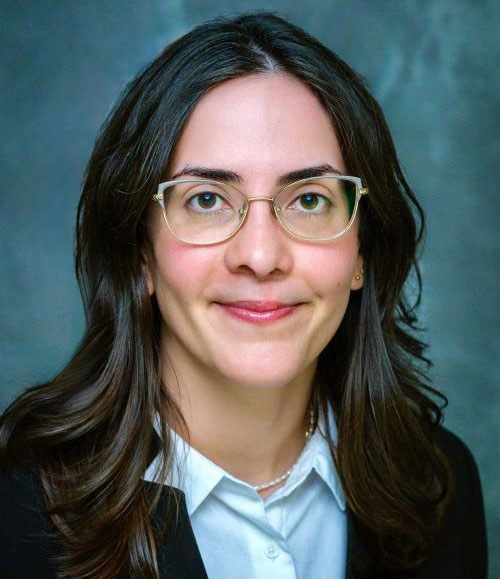
The Michigan State University Department of Psychology welcomes Dr. Meltem Yucel as a new assistant professor in the social/personality research area.
Born and raised in Istanbul, Turkey, Dr. Yucel comes to MSU after receiving her doctoral degree from the University of Virginia and completing a postdoctoral fellowship at Duke University that was funded by the National Institutes of Health. Dr. Yucel has a passion for understanding why people behave the way they do. Her research focuses on how children and adults understand rules, group identity, and moral development.
Dr. Yucel sat down with me to discuss her research interests, why she wanted to join MSU Psychology, and what people can expect out of her lab.
What is your research focus?
My research centers on how people think about rules, how group identity shapes those judgments, and how we respond when rules are broken.
First, I study how children and adults distinguish between different types of rules— moral rules like "don't hurt others," social conventions like "don't wear pajamas to work,” religious rules like “go to mass every Sunday,” and environmental rules like “don’t litter”. I’m interested in how and when we start recognizing these differences and what that reveals about how our sense of right and wrong develops.
Second, I look at how group membership influences these judgments. For example, how do children and adults think about violations of religious rules depending on whether the violator is an in-group member (someone from my religion) or an outgroup member (someone who is not from my religion)? These questions get at the root of religious conflict and intolerance, which often arise from our expectations of how people should behave, and how we react when they don't.
Finally, I examine what happens when people break rules. How do we judge those who misbehave, and how do we enforce rules through things like protesting, tattling, or gossiping? I'm particularly interested in gossip, both as a social phenomenon and as part of the broader picture of how we respond to rule breaking.
Tell us about the Moral Minds Lab. What will you be researching and how can people get involved?
The Moral Minds Lab is a brand-new lab located in the Psychology Building. Our team includes five undergraduate research assistants, and we’re excited to begin our studies soon. That includes both in-person studies here on campus, and outreach through community events. We’re excited to build connections with local schools and organizations and connect with families about science.
Most of our studies are behavioral, which often means playing fun, interactive games with kids. For example, we might read a storybook and ask children what they think about the characters’ choices, or use puppet shows to see how children respond to rule-breaking. In one study, we had a puppet break a rule, and we looked at whether children told on the puppet, tried to fix the situation, or responded in another way.
We also conduct eye-tracking research. In these studies, children sit either on their parent’s lap or by themselves in front of a screen. Using a harmless infrared light (the same kind you’d find in a TV remote), we track where they look and how their pupil size changes in response to different events they see. These subtle, non-invasive measures help us understand how children process social and moral situations.
We’re currently seeking participants—children ages 3 to 12, as well as adults— to do science with us and help us learn more about how moral thinking develops. Children get small gifts for participating.
Why are you excited to join the MSU social/personality research area?
I’m thrilled to join the MSU social-personality group because they’re not only conducting world-renowned research, but they’re also a genuinely supportive and welcoming people. I was already familiar with much of the faculty’s work and admired it. What stood out to me, though, is that the department isn’t just academically strong, it’s also a place where people clearly enjoy working together.
Prior to joining MSU, I had a chance to meet MSU Psychology faculty at conferences and in other settings, and those interactions confirmed what I’d heard: they’re thoughtful, smart, and collaborative. That sense of community matters a lot to me. When faculty are happy and connected, it creates an optimal learning environment where our students can thrive too.
Tell me about the Psych Research List, a website you created that offers various opportunity lists for academics from undergrads to faculty.
As an undergraduate student in Turkey, I was eager to gain research experience, but one of the biggest challenges was simply figuring out where to find opportunities outside my university. I spent a lot of time searching on my own to track down internships and summer programs. Later, as a grad student at UVA mentoring undergraduates, I saw my mentees were facing the very same question: where do we even start?
That’s part of what people call the "hidden curriculum” of academia—you’re expected to know how to find opportunities and resources, but rarely does anyone explicitly tell you how. To help my mentees, I began compiling a list of paid summer internships and eventually shared it on Twitter. To my surprise, it resonated widely, which made me realize that many were in the same position I had been in. So, I created the Psych Research List website. It now serves as a centralized hub of resources for students interested in psychology and neuroscience, including grants, paid internships, post-baccalaureate jobs, virtual graduate school informational sessions, and even conference announcements to help students connect with academic communities relevant to their interests.
Since its launch in 2020, the site has reached more than 105,000 students and faculty from 171 countries. To me, that reach underscores just how widespread the need is. My hope is to keep maintaining and expanding the site so students and early-career researchers can spend less time searching and more time pursuing the opportunities that excite them.
Parents, sign up here to have your child participate in this research. The Moral Minds Lab will contact you if your child is eligible for a study. In the meantime, stay connected with the Moral Minds Lab on Instagram!