Jump to HeaderJump to Main ContentJump to Footer
Michigan State University
Department of Psychology
  • Directory
  • Give
  • Login

College of Social Science

Department of Psychology

  • Academics
    • Overview
    • Undergraduate
    • Graduate
    • Adolescent Diversion Program
    • Advising
    sona-participation-photo1

    HPR/SONA Participation

    Participate in psychology research!
  • |
  • Research
    • Overview
    • Clinical Science
    • Cognition and Cognitive Neuroscience
    • Social / Personality Psychology
    • Behavioral Neuroscience
    • Organizational Psychology
    • Ecological-Community Psychology
    • Work and Organizational Psychology
  • |
  • News
  • |
  • Events
  • |
  • About
    • Overview
    • Message from the Chair
    • Access, opportunity, and excellence
    • Our Facilities
    • Contact
    merch-web2

    Visit our online store

    Shop Today!
  • |
  • Directory
  • |
  • Clinic
    • Overview
    • About
    • Clinical Staff
    • Administrative Staff
    • Resources
    • Online Bill Payment
    • Support the Clinic
    MSU Psych Clinic

    Ready to get started?

    Make an Appointment
Department of Psychology

College of Social Science

  • Academics
  • Research
  • News
  • Events
  • About
  • Directory
  • Clinic

< Academics

  • Overview
  • Undergraduate
  • Graduate
  • Adolescent Diversion Program
  • Advising
sona-participation-photo1

HPR/SONA Participation

Participate in psychology research!

< Research

  • Overview
  • Clinical Science
  • Cognition and Cognitive Neuroscience
  • Social / Personality Psychology
  • Behavioral Neuroscience
  • Organizational Psychology
  • Ecological-Community Psychology
  • Work and Organizational Psychology

< News

< Events

< About

  • Overview
  • Message from the Chair
  • Access, opportunity, and excellence
  • Our Facilities
  • Contact
merch-web2

Visit our online store

Shop Today!

< Directory

< Clinic

  • Overview
  • About
  • Clinical Staff
  • Administrative Staff
  • Resources
  • Online Bill Payment
  • Support the Clinic
MSU Psych Clinic

Ready to get started?

Make an Appointment
  • Directory
  • Give
  • Login
Social / Personality Psychology

Aug. 14, 2026

New study: Unfairness isn’t morally wrong to preschoolers (or adults) in most cases

Shelly DeJong

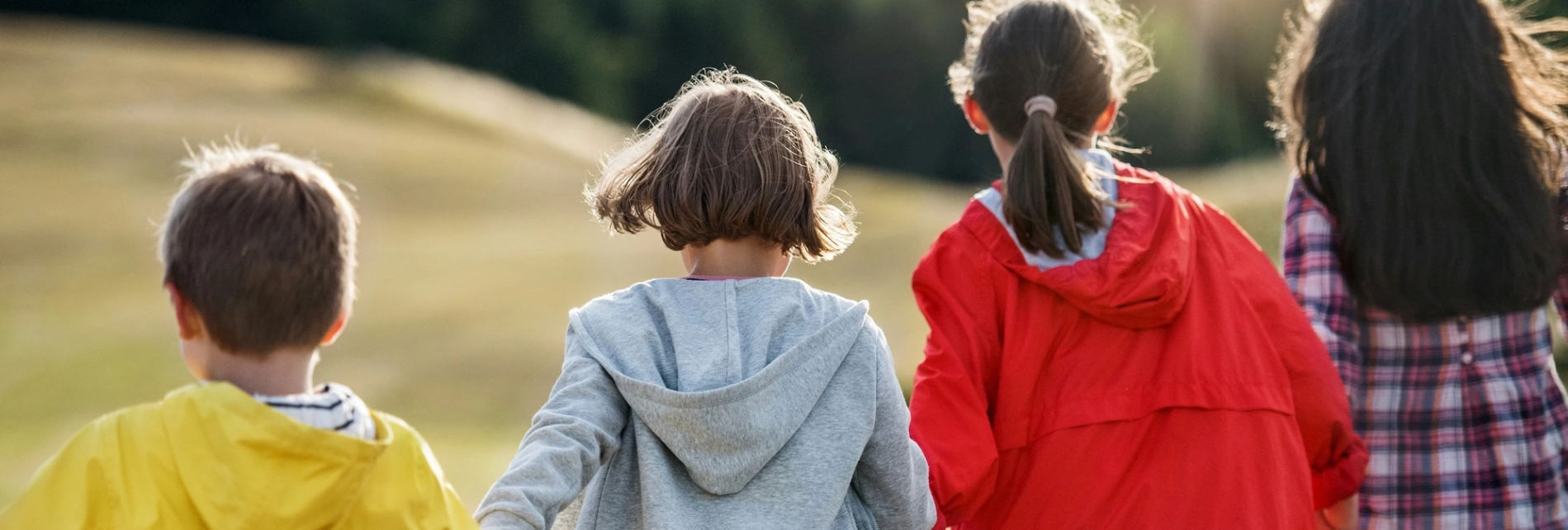
Four kids walk together

It’s not unusual to hear the phrase “No fair!” when spending time with children. But two back-to-back MSU studies found that 4-year-olds may not view unfairness as a clear-cut moral violation — except for when the harm was explicitly highlighted to them.

Both studies, published in Social Cognition and Behavioral Sciences, challenge the long-held assumption that children instinctively view unfairness as a moral violation on par with physical harm.

Researchers presented 4-year-olds and adults with short scenarios involving different norm violations including moral rule violations like physical or property harm, fairness rule violations like getting fewer resources than others, and social rule violations like breaking a dress code.

Children and adults were then asked to rate how serious each violation was. Across both studies, children rated unfairness more like a social misstep than a moral one.

“For a long time, researchers have assumed children naturally see unfairness as morally wrong. Our work challenges that assumption,” said Meltem Yucel, co-author of both studies and faculty at MSU’s Department of Psychology. “If children don’t immediately moralize unfairness the way they do physical harm, it has real implications for how we raise morally sensitive, fairness-conscious kids. It also raises important questions about why tolerance for inequality can persist, and what we might do about it from an early age.”

But when the researchers told the kids that someone was sad because they received fewer resources, the kids shifted and rated the unfairness as seriously as a moral violation. Adults consistently rated unfairness to be alongside social violations regardless of whether the harm was emphasized.

“When harm is made visible and concrete by saying that the recipient of inequality was sad, children respond,” said Yucel. “This highlights the possibility that there may be real, actionable ways to help children and even adults to become more attuned to injustice.”

The researchers hope that this opens new conversations about how children are socialized to recognize and push back on inequality, as well as prompting researchers to revisit assumptions about how fairness fits into moral development.

Social / Personality Psychology

Academics

  • Graduate
  • Undergraduate

About

  • Access, opportunity, and excellence
  • Message from the Chair
  • Directory
  • Our Facilities
  • Give

Research

  • Behavioral Neuroscience
  • Clinical Science
  • Cognition & Cognitive Neuroscience
  • Ecological / Community Psychology
  • Organizational Psychology
  • Social / Personality Psychology
  • Work and Organizational Psychology

Clinic

  • About
  • Administrative Staff
  • Clinical Staff
  • Resources
  • Getting Started
  • Online Bill Payment

News & Events

  • News
  • Events

Contact us

(517) 355-9562

Address

Department of Psychology Michigan State University Psychology Building 316 Physics Rd, East Lansing, MI 48824

Follow Us

  • Visit our Facebook page
  • Visit our page on X
  • Visit our Instagram page
  • Visit our LinkedIn page
  • Visit our YouTube page

If you're having accessibility issues, please let us know.

Know More: Campus Safety Information and ResourcesTransparency Reporting: Budget & Salary/Compensation
  • Contact Information|
  • Site Map|
  • Privacy Statement|
  • Site Accessibility|
  • Call MSU: (517) 355-1855|
  • Visit: msu.edu|
  • Notice of Nondiscrimination|

SPARTANS WILL|© Michigan State University|