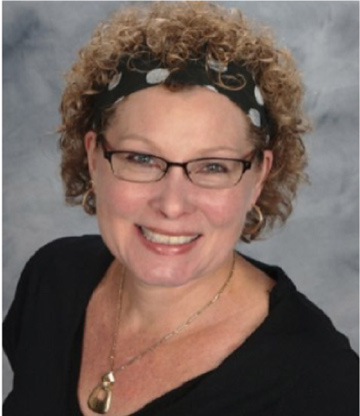
For 21 years, ecological-community psychologist and program evaluator Robin Lin Miller has been an essential member of the Michigan State University's Department of Psychology.
"Dr. Miller was the Director of our Ph.D. Program in Ecological-Community Psychology for many years. Her leadership was instrumental in expanding our curriculum and training opportunities in program evaluation and community-engaged research,” said Rebecca Campbell, University Distinguished Professor. “Dr. Miller was a steadfast advocate for our graduate students and created innovative classes and training opportunities for their ongoing professional development.”
As a scholar of ecological-community psychology, Dr. Miller has over 39 years of experience evaluating HIV prevention and care programs in community-based and clinical environments. Her research focuses on effective community-based HIV prevention and access to care, particularly among adolescent and young adult Black sexual minority males in the United States, Africa, and the Caribbean.
Dr. Miller came from a long line of psychologists, social workers, and physicians, many of whom dedicated their careers to creating a better world for underserved and minoritized populations. When she decided to pursue a PhD, she sought a degree that would support her interests in community-designed and community-led initiatives to create communities that were better for the people who lived in them. She found her fit in community psychology.
“My favorite aspect of the work that I do, if I have to choose just one, is working shoulder to shoulder with community activists and service providers to answer questions that are useful and relevant to improving the work they are doing, whether that works is an advocacy campaign or testing an institutional policy change or fielding a community-level intervention, while at the same time, studying what they do with rigor under messy real-world circumstances,” said Dr. Miller. “There’s so much creative problem solving one must do when the control of a textbook experiment is not possible. It is also a highly creative endeavor to engage community members effectively in every stage of the process as co-owners of the work and share what is being learned with a diversity of audiences.”
In 1982, Dr. Miller found herself at the forefront of the New York City gay community’s HIV response. Her ability to contribute to community-driven approaches to addressing the HIV epidemic became a natural area of focus and served as her primary path to developing expertise in program evaluation theory and practice.
She honed her skills in evaluation at the first AIDS organization in the world, the Gay Men’s Health Crisis, where she worked full time during graduate school. Dr. Miller founded its first department of evaluation where she conducted pioneering work, including fielding a first-of-its-kind intervention study in collaboration with male sex workers to encourage safer sex during their commercial transactions.
Dr. Miller continued her work on designing, conducting, and evaluating interventions in partnership with young Black gay and bisexual men at the University of Illinois at Chicago for ten years before beginning her tenure at Michigan State University.
“She has shown an unwavering commitment to human rights research, HIV prevention and care, and LGBTQ+ communities,” said Jae Puckett, associate professor in the Department of Psychology at MSU. “I am so grateful to have had the chance to be her colleague. She has helped shape the lives and work of many community psychologists, with her impact rippling outward through the work of those she taught, mentored, and inspired. My students have learned a great deal from her about the values at the heart of community psychology and the possibilities for making meaningful contributions to the communities we work with.”
In 2024, Miller co-authored Breaking Barriers: Sexual and Gender Minority-Led Advocacy to End AIDS in Africa and the Caribbean. It offers readers a unique behind-the-scenes perspective on LGBT activism by closely following the journeys of activists as they address the HIV epidemic amid challenges.
"Breaking Barriers offers a good example of the challenges and rewards of the style of work that I have done throughout my career and what sticking to your values can look like,” said Dr. Miller. “In that project, I worked closely with eight community-led human rights and HIV activist organizations, most of which are based in African and Caribbean countries that criminalize same-sex sexual partnerships, to improve access to HIV prevention, testing, and care in their countries for gay and bisexual men and transgender women. It was impressive what we accomplished on a shoestring budget and a very short timeline, especially given the country contexts in which we were working.”
During her years-long dedication to developing the modern discipline of evaluation, Dr. Miller has served as editor in chief of the American Evaluation Association’s flagship journal, as a member of the AEA Board of Directors, and as part of a task force that developed the US national competencies for the discipline. She also served on the American Psychological Association’s Task Force to address how psychologist ought to respond to youth and adults who are distressed by their same-sex attractions, for which she took the lead in reviewing evidence on conversion therapy outcomes. That report was highly influential in shaping state-level policy to ban the practice for minors in the US and has had wide international influence.
Miller’s scholarship and contributions to research and program evaluation have been widely recognized through numerous awards, grants, and publications.
“I deeply appreciate my election as a fellow in the Society for the Psychological Study of Social Issues (Division 9) and the Society Community Research and Action (Division 27) of the American Psychological Association, as well as to the international Academy of Community Engagement Scholarship,” said Dr. Miller. "I am also proud of being appointed Professor Emerita on the occasion of my retirement."
Her three career awards from the American Evaluation Association, most recently the Alva and Gunnar Myrdal Evaluation Practice Award, affirm the work that Dr. Miller did to advance evaluation as a profession and practice. She also earned an Exemplary Project W. K. Kellogg Foundation Community Engagement Scholarship Award from the Association of Public and Land Grant Universities and the Engagement Scholarship Consortium for the work that is described in the book she co-wrote.
“As a scholar, Dr. Miller was best-in-class," said Campbell. “She is a masterful practitioner-scholar who works with communities to understand their needs and develop creative, participatory methods to work together to co-design and implement research projects and interventions. I will miss having her in the department because I could always come to her with a complicated methodological problem and she would help me find a great solution that balanced rigor and community engagement.”
In retirement, Dr. Miller plans to continue to do evaluation-related work as a consultant on a small scale, complete a substantial family history research project, and take classes in things that interest her, including training to serve as an end-of-life doula.
“Robin's influence will continue to impact our program and the field beyond her retirement as we carry forward the values she has so consistently embodied of making research accountable to the communities we work with and ensuring research contributes to creating a more just world for marginalized communities," said Puckett. “We are all so thankful for her leadership of our program!”