
Work closely with outstanding faculty and top performing fellow graduate students. Be supported in your research, build your professional network, and grow in your career and as a person. We offer competitive support packages and fellowships as well as resources to support your research and travel to professional conventions. The success of our graduate students is important to us.
While graduate students will need to be on campus when working in a lab, teaching a class, or working in the clinic, they generally have autonomy in determining the time and place where they work. Although all PhD students have their own desk, some students prefer to work at home, in coffee shops, or in one of the university’s libraries. Students' schedules also differ based on program area. For instance, in Clinical Psychology and Organizational Psychology, it is common for students to work on internships that have different scheduling requirements.
Certain statistics classes and psychology classes in your program area are required, but for the most part, students can shape their class schedule to fit their unique interests. One can also take classes within other areas of psychology and outside of the department altogether. Most classes are reading and discussion based, and meet once a week for about 3 hours. Class papers are often written with the intention of converting them into future research projects. Students typically take only two classes per semester to leave time for working on research projects.
Research projects can be initiated by both faculty and students and range across a wide spectrum of interests. Students can work one-on-one with professors, on larger research teams, with one another, or on their own. Michigan State has the advantage of a large subject pool to facilitate lab-based and survey research.
Conferences are a popular outlet for students to present their work. Students regularly present their research at the annual conferences for the American Psychological Association, and the Association for Psychological Science, as well as conferences pertaining to their program area. Students may apply for funding to travel to conferences.
Many students play on intramural teams throughout the year. Psychology students team up with one another and other graduate students, which is a great way to meet new people and have fun.
Many students also pursue activities outside of the program, including MSU sports teams, recreational classes, clubs, and associations. Both the East Lansing Hannah Community Center and the MSU Graduate School offer affordable or free exercise classes. Students can also get involved in volunteering activities, or join the Council of Graduate Students. There are opportunities to get involved with the community both through MSU and the surrounding area.
Many students also like to just spend time together outside of the office. Going to football games, movies (tickets are very affordable!), theater performances, and concerts are some of the things to do for fun.
Students take trips to neighboring cities like Detroit, Grand Rapids, Ann Arbor, Grand Haven, and Royal Oak to experience all that Michigan has to offer. Michigan is also a natural beauty, and is home to destinations like Sleepy Hollow State Park, Mackinac Island, and Sleeping Bear Dunes where students can go to hike, camp, kayak, etc.
A lot of students travel home during the holidays. During the summer and spring breaks, many go home for several weeks and easily continue working with team members and faculty remotely.
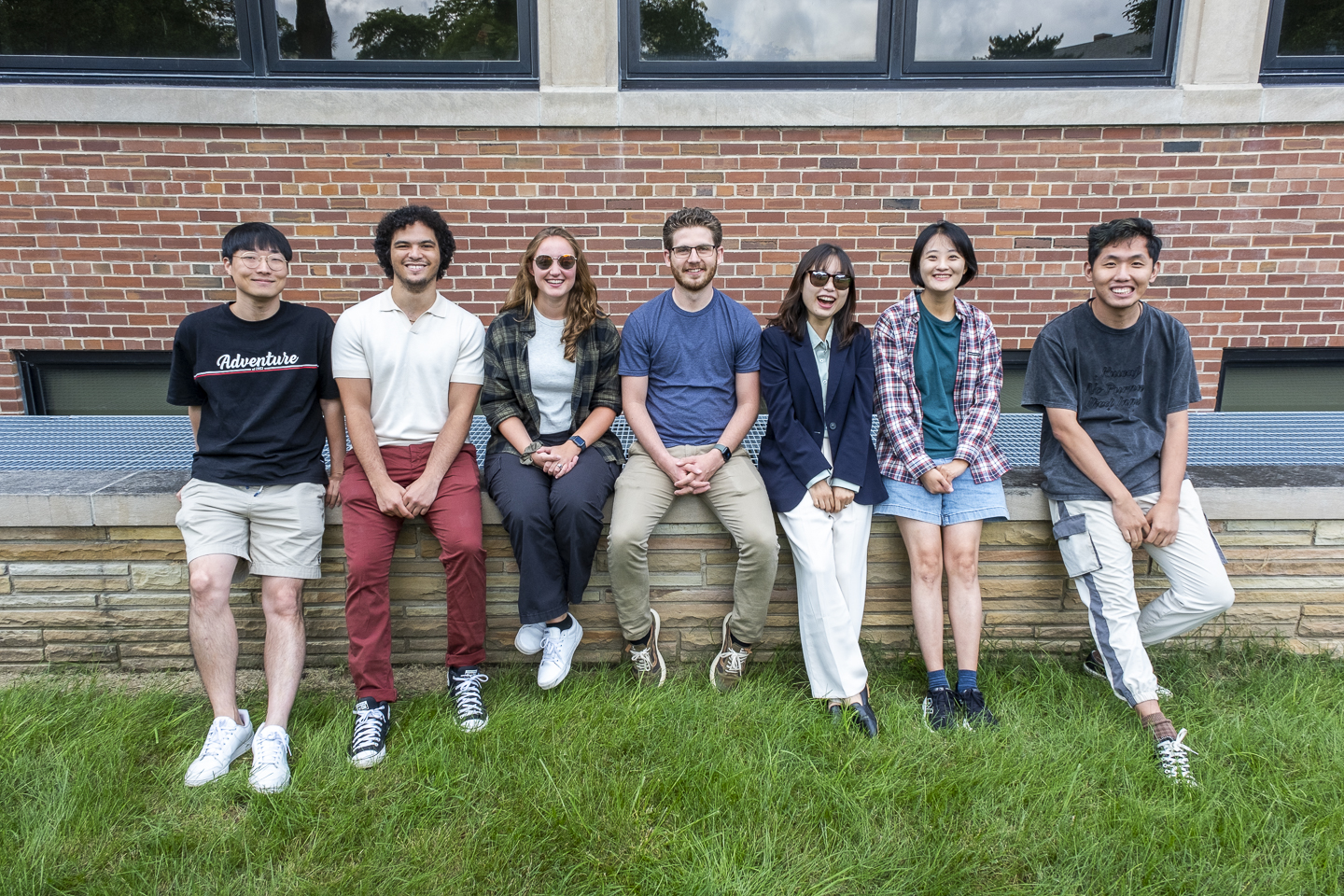
"Manage your time and energy. Pursue work you are interested in and it will help you in your future career or help you decide what path may be best for you."
"Every grad student looks at the successes of their peers and thinks in the back of their mind that they are the worst grad student in the department. If everyone is a failure, then no one is. Just go at your own pace and you will find success."
"Be sure to take time for yourself. Graduate school is a big time commitment, but it's important to ensure you're taking the necessary time off and focusing on your mental and physical health."
"Work hard, ask questions, and have fun!"
The Department of Psychology at Michigan State University is committed to creating clear and open pathways for all students to succeed at MSU. We embrace the differences among our colleagues, and believe that our success as scholars, educators, and citizens relies on learning from the experiences and perspectives we all bring. We strive to maintain an inclusive, respectful community that fosters collaboration and shared responsibility.
Our faculty and students believe that an enhanced understanding of all people is critical for the development of our individual students and faculty as psychologists, researchers, and professionals in the field.
Graduate students at MSU typically are awarded funding at the time of acceptance. Funding is typically granted via a fellowship or an assistantship. Most students will receive this funding including tuition coverage and health insurance. A fellowship is an award you are given to support you as you take classes and do research. An assistantship is employment (typically as a teaching assistant or research assistant). Note that both fellowships and assistantships are considered taxable income. See https://grad.msu.edu/ for more information.
Graduate assistantships are an additional educational opportunity for graduate students to improve their skills in teaching and research among other activities while pursuing graduate education. Michigan State University offers teaching assistant, research assistant and teaching exempt positions.
MSU HR - Graduate Assistant Info
The University provides fellowships to select students at the time of admission. Nominations for fellowships are made by departments and colleges.
https://grad.msu.edu/universityfellowships
Students also often apply for and receive fellowships from outside entities (e.g., the National Science Foundation, the National Institutes of Health). See https://grad.msu.edu/external-funding for more information.
Evaluating evidence to create knowledge and make decisions is necessary in research careers in and outside of academia. The Quantitative Methods and Evaluation Science (QMES) certificate is a series of courses and projects that teach you highly sought after skills in quantitative and qualitative methods above and beyond the required training. This gives you additional skills to answer your research questions and make contributions in your career. The QMES Concentration is an option for students in all areas of the department and can be completed at any stage during your graduate training.
LEARN MORE ABOUT