Jessica Tschida knows firsthand what it's like growing up in a rural, underserved community. As a graduate student, she realized how little say her community had in the few services that they did receive. This understanding has driven her to prioritize the voices of underserved communities in her research.
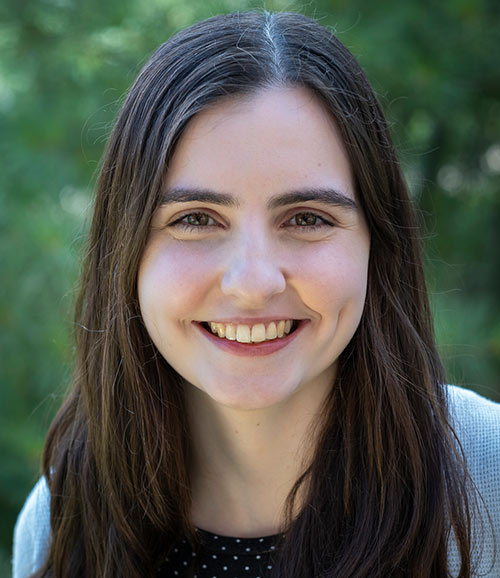
Tschida is a fifth-year graduate student in the Clinical Science research area in MSU’s Department of Psychology. Prior to beginning graduate school, Tschida was a research assistant at the Children’s Hospital of Philadelphia’s (CHOP) Center for Autism Research and will be returning to CHOP this summer to complete her doctoral internship in the Autism Spectrum Disorders track. Tschida has long known she wanted to focus on autism research as well as community-based implementation.
“I'm interested in hearing from autistic people themselves, their caregivers, providers who are actually out in the community delivering these services,” said Tschida. “I want to make sure that the services that we are developing in research laboratories are going to be able to respond to the community’s actual needs and priorities.”
Tschida is spearheading a project that, with the help of the community, is adapting a therapy for marginalized and minoritized autistic youth who are experiencing anxiety and receiving their services in community-based settings. A Community Advisory Board that consists of autistic adults, caregivers of autistic youth, community providers, and agency leaders, oversee the project and gives feedback every step of the way—all to make sure that the project stays consistent with community priorities and values. Participants in the study also include autistic adults, autistic youth, caregivers of autistic youth, community providers, and agency leaders. The Community Advisory Board and study participants were purposefully selected to identify with one or more marginalized or minoritized identities.
Involving these community members ensures that the adapted therapy is responsive to underserved communities as well as neuro-affirming.
“Historically, a lot of therapies have not been very neuro-affirming,” said Tschida. “This project’s goal is to know what will be most effective in the community but also to make sure that the therapies we’re developing are responsible, respectful, and affirming.”
Alongside listening to the voices of the community, Tschida also consults with intervention researchers to see what is known about this therapy and what should be maintained based off evidence.
“Anxiety is one of the most common mental health concerns for autistic youth”, said Tschida.
There are many effective, evidence-based treatments for anxiety, but many providers have been trained in autism but not necessarily in treating anxiety, and others are trained in anxiety but not in autism. After interviewing community members about their experiences with therapy, Tschida heard that many people are struggling to find nuanced services for their needs. Hearing directly from the community has helped Tschida know what is working well in these therapies and what needs to be changed.
“We’ve now just finished trialing the community adapted therapy with autistic youth and their caregivers, and the response has been really positive,” said Tschida.
Next, the original therapy as well as the updated community-adapted therapy will be comparatively evaluated by community providers to see which one they think will work best for their clients and in their settings. These community providers won’t know which one is the original version of the therapy and which one the community has helped adapt.
“The hope is that by including community members in the process, we’ll develop a therapy that is better suited to the community’s needs and priorities,” said Tschida. “Many autistic youths experience anxiety and receive services in community-based settings so my hope is that this therapy will be more responsive to their needs.”
Tschida is also working to evaluate community-engaged research, as little research has evaluated community-engaged methods themselves. Tschida has already heard how much it means to community members to be included in the research process. She has also seen community providers and agency leaders eager to improve their practices.
“I’ve been really struck by how willing community providers are to hear these stories,” said Tschida. “Community members want to be heard, and service providers want to improve their practice so it's more effective for their clients. It’s really apparent how valuable this project is from both angles.”