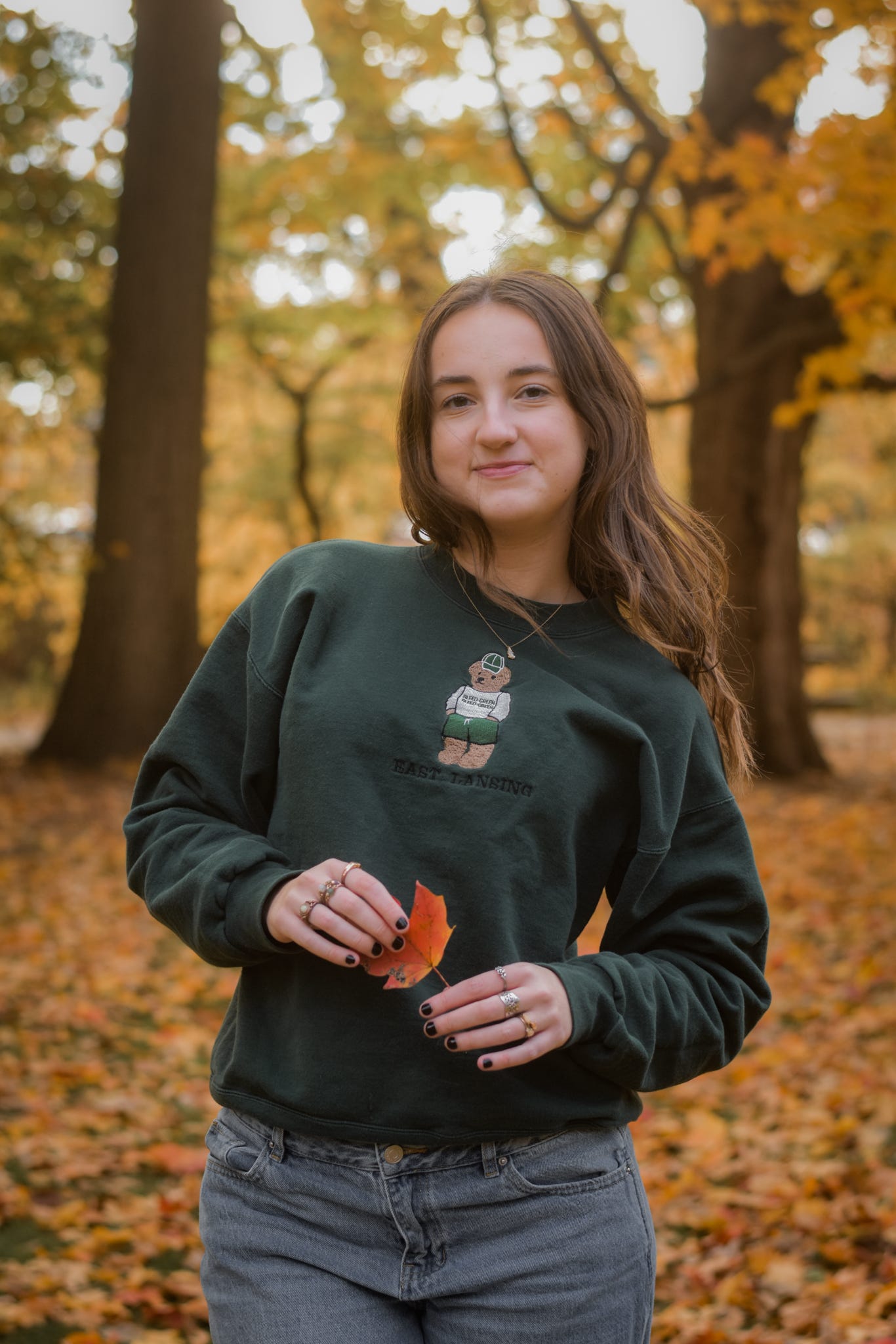
Caitlin Reed is a senior studying psychology and criminal justice. As a junior, Caitlin participated in the Adolescent Diversion Program (ADP), an experiential learning course that involves training undergraduate students to work with local youth who are involved in the juvenile court system. This year, Caitlin is serving as an undergraduate assistant for the program.
Caitlin recently shared about how ADP has impacted her, what it means to be a part of such a longstanding program, and what advice she has for students thinking about joining ADP.
Why did you want to join ADP?
Right up until I joined ADP actually, I was really interested in doing therapy and working in that space, but I'd always been really drawn to working with kids and in the justice system and things like that. So, ADP seemed like a really great opportunity to make a meaningful difference in the community and get hands-on experience in advocacy and mentorship, which is a field that I hadn't considered before.
How has ADP impacted you?
ADP has been so huge in my life. The biggest impact ADP has had on me is that kids have so much to teach us if we're willing to listen to them. We often work with kids who have been through pretty severe trauma, and you know, they meet with a stranger for 18 weeks, six hours a week, and they allow you the honor of coming into their lives. My case has taught me so much about humility and curiosity and empathy, and all these things that are so crucial to social work and the world we live in, so much more than I could ever learn in a classroom.
How has ADP helped you figure out your career path?
For as long as I can remember, probably since I was a freshman in high school, I wanted to do therapy. I'd always been really interested in the justice system, but I always thought that I would kind of operate in that context as a therapist. But then I joined ADP. I started learning the material and working through my case, and I realized that what I was really drawn to was being in the community, working really closely with families and individuals like that, and it kind of led me to realize that I want to do school social work and work with families in that way.
Without ADP, I don't think I would have learned that as quickly. Everything that I had done in college, and even in high school, was leading me towards therapy. I never had really branched out from that. ADP kind of forces you to really get in the community to understand the systems that these kids live within, understand the challenges they face, and that their family faces. So, I don't think I would have ended up at the career path that I'm at now if I hadn't gone through ADP and experienced all of that.
What is something that surprised you about ADP?
I think the community that came from it most surprised me. My class section is so close. We are still really good friends even outside of class. ADP is such a unique experience because you can't talk about it with anybody else to debrief about your day or anything like that due to confidentiality. You really have just the community you have in your classroom. Our instructor Sean always says that ADP is family and ADP is for life—and it's true. We all look out for each other, and we've all really grown so close.
What has it meant to you to be a part of this program?
I feel incredibly honored and incredibly humbled to be a part of ADP. Like I said, we often work with kids and families who have been through pretty severe trauma. You are a stranger coming into their life, and kind of asking them to give you a front row seat to some of the worst things that have ever happened to them, and they do it, especially the kids, with a lot of bravery. Every time I think about it, I think about how humbling it is that a child allowed me to be that person for them. It's such a beautiful thing to be a part of.
Thinking about the 50th year anniversary of ADP, what is it like being a part of such a longstanding program?
It's really cool. I mentioned ADP is like a family, so when you go around Lansing, chances are you could throw a rock and hit someone who knows what it is. It's really cool as a student to have that type of network, but it's also really incredible to see the impact that our kids have on the community. It kind of opens everybody's eyes to what's going on, and not just in Lansing, but around the country and around the world. It’s cool to see that the community comes together to work with these kids and their families, too. They give discounts and coupons to make a difference in helping kids just get to be kids.
What would you say to someone thinking about joining ADP?
Do it. It's definitely the best decision I have ever made in college. It is hard, and it really tests you. It's going to put you so far out of your comfort zone, you didn't even realize that you could be that far out of your comfort zone, but if you are willing to open your heart and be curious and be empathetic and learn from your mistakes and all of those things, it's truly the best experience. ADP taught me so much more than you can learn in the classroom, so I'd say do it, do it, do it.
I think really anybody would be a good fit, but I think the people who do the best in ADP are the people who are okay with being wrong and are okay with making mistakes. You can never really truly be prepared for what your case is, so you have to be okay with doing something and realizing that it didn’t work and you need to try something else. The kid that you work with will humble you sometimes and you have to be okay with that.
Is there anything else that you'd like to add that we haven't touched on?
ADP is such an incredible experience, whether you plan on going into social work or therapy or anything like that. It is such an incredible experience because it's hard for a lot of us to understand what others in our community go through. For a lot of us, we go to this beautiful college with so many great opportunities, and we don't know that down the road there's a family that can't feed their kids or that kids can't go to school because they're taking care of their siblings, or that there's a system that works with so much oppression and so many challenges for so many people. So even if you're not a psych, criminal justice or social work student, I think that if you want to learn about your community and make a difference, I think ADP is really for anybody.