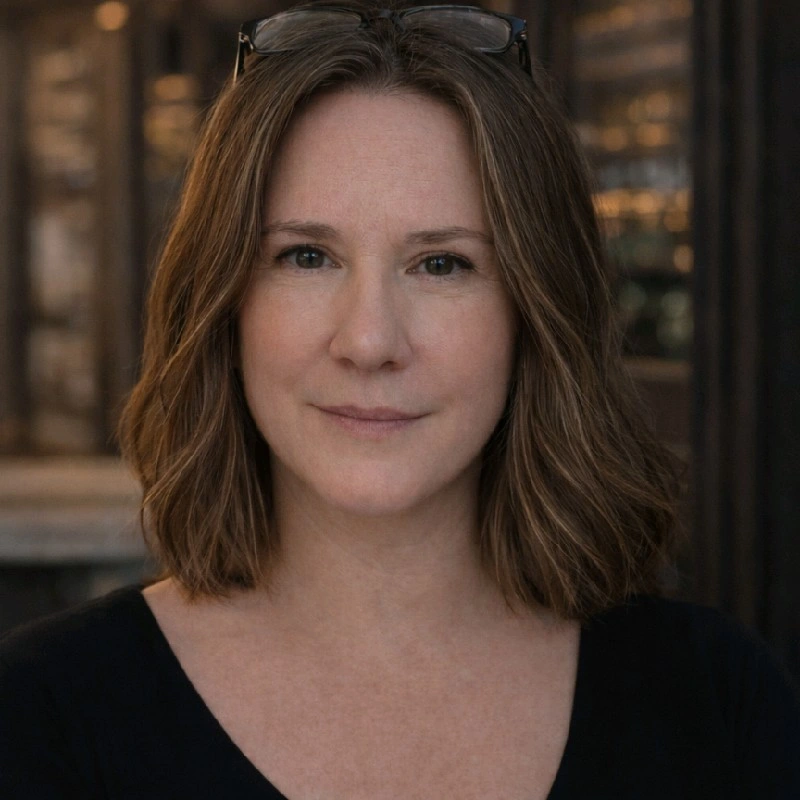
Robin Reibe is a second-year student in MSU's Work & Organizational Psychology’s master's program. As a director in the consulting/professional services sector, she was drawn to the 5-week class design from a leading institute in the field of Industrial-Organizational (IO) Psychology.
Robin shared with us recently about her experience in the program, what has surprised her the most about going back to school as a working adult, and how it's already impacting her career.
Why did you choose this program?
MSU is among the top programs for IO in the country, and I wanted to learn from people who are well established in the field. I also wanted a program that would build on my years of professional experience while giving me a deeper understanding of organizational behavior, leadership, and strategy. The program is set up for working adults like myself who cannot step away from my career for education. The program was thoughtfully designed in 5-week sprints which fit right into my working schedule.
What has surprised you the most since joining this program?
What surprised me the most is how much I have enjoyed being a student again. I expected to learn a lot, but I didn't expect to enjoy the academic experience and connections with my cohort as much as I have. It's been rewarding to look at familiar workplace challenges through different lenses and sectors.
If you had to describe this program to someone unfamiliar with it in one sentence, what would you say?
A practice-focused, expert-led program that applies the science of psychology to the real-world challenges of people, leadership, and organizational effectiveness, equipping professionals to help both employees and organizations thrive in an evolving workplace.
Tell us about a class, project, or professor that stands out to you.
I have been impressed by all of the professors, who bring a great deal of care, experience, and knowledge to their teaching. Dr. Kevin Ford and Dr. Daisy Chang have guided our cohort through the first year thoughtfully and expertly. I particularly enjoyed Dr. Christopher Nye's and Dr. Nathan Carter's classes. One thing that stands out to me is how thoughtfully the courses are designed to build on one another, creating a connected learning experience rather than a series of unrelated classes. The talent management course was especially meaningful to me because it challenged me to look more critically at performance, development, and succession planning and connect the research to my own professional experience.
Has any aspect of this program already impacted your career or current job?
Yes. It has changed how I think about organizational challenges. I find myself looking beyond immediate problems and considering the systems, leadership behaviors, and structures contributing to them. I've also been able to apply what I've learned directly to my organization by developing new learning programs and helping address organizational challenges. The program has reinforced my interest in broader organizational strategy and leadership.
Any advice for other people thinking about applying?
Come in with an open mind and be willing to challenge what you already know. Professional experience is valuable, but connecting that experience to research and new perspectives can be just as valuable. You don't need to have your entire career mapped out to benefit from the program. The challenges organizations face aren't going away and there is a real and growing need for people who understand the science of human behavior and how to apply it in the workplace. I believe there is a very real place at the table for I-O psychology.