

PSY '26 Grad Spotlight with Nitya Thakur
May 13, 2026 - Shelly DeJong
 Meet Nitya Thakur, a psychology ‘26 graduate with minors in Cognitive Science and Human Behavior & Social Work. Initially drawn to the science, Nitya soon came to appreciate that psychology sits at the intersection of science and humanity - something she hopes to carry with her as she pursues an MSc in Psychiatric Research at King's College London.
Nitya recently shared about finding her community at MSU, what PSY classes she loved, what she learned during her journey here, and what very practical advice she has for PSY students.
How do you use your PSY education today?
I recently graduated and will be continuing my education at King’s College London, where I’ll be pursuing an MSc in Psychiatric Research. My psychology education has been the foundation of everything, from learning how to think critically about human behavior to conducting my own research on how people judge purpose in others’ lives. Presenting that work at UURAF 2026 and receiving the Puri Award really solidified my passion for research and showed me how much I’ve grown as a scientist. I’m excited to take those skills to London and continue exploring the intersection of psychology and mental health on a deeper level.
What do you love about psychology?
What I love most about psychology is that it never stops being relevant. Every interaction, every relationship, every decision people make, there’s always something deeper to understand. What drew me in initially was the science of it, but what keeps me passionate is how deeply human it is. Studying how people perceive purpose in others’ lives, for example, made me realize that psychology isn’t just about understanding behavior, it’s about understanding what makes life meaningful. That intersection of science and humanity is something I hope to carry with me into psychiatric research and beyond.
Tell us about where you found your community at MSU. What groups, labs, or activities helped you find your place? How so?
Finding my community at MSU happened in layers. As a Resident Assistant, I found purpose in showing up for my residents and being a consistent source of support, it taught me as much about people as any classroom did. In the CRL, I found my identity as a researcher, surrounded by peers and mentors who pushed me to think deeper and take my ideas seriously. Days for Girls gave me a sense of global purpose, reminding me that community extends far beyond campus. Holmes Hall Association kept me grounded in the place I called home. And studying abroad in Japan was truly transformative, experiencing a completely different culture firsthand deepened my understanding of human behavior and perspective in ways I never could have gotten from a textbook. Together, these experiences didn’t just fill my resume, they shaped who I am.
What were your favorite PSY classes and why?
Two courses stand out as my absolute favorites. PSY 339, Psychology of Women with Professor Lucy Thomson, was one of the most eye-opening classes I took. It gave me a new framework for understanding identity, gender, and lived experience, topics that feel deeply relevant both personally and professionally as I head into psychiatric research. My other favorite was PSY 401, my capstone course on Expertise and Skill with Professor Zack Hambrick. What made it special was how personalized it felt, we got to research topics we were genuinely passionate about, and I explored expertise through the lens of music, looking at how skill is actually built over time. It was one of those rare classes where the material felt alive because it connected directly to something I cared about. It also reinforced my love for research and reminded me why I chose psychology in the first place.
 Looking back at your time at MSU, what did you learn?
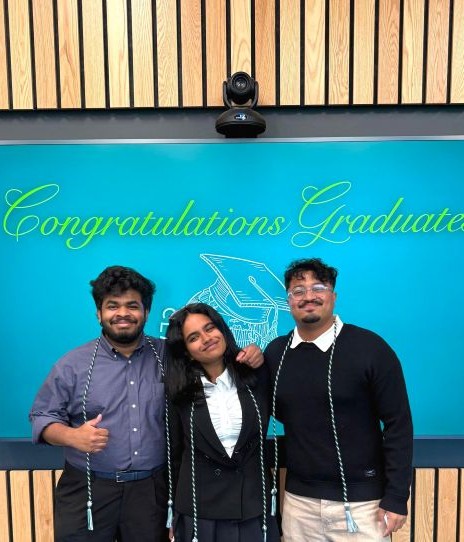
Looking back, I learned far more than I ever expected, and a lot of it happened outside the classroom. Coming to MSU as an international student, I had to find my footing in a new country, a new system, and a new way of life. That experience alone taught me resilience, adaptability, and the kind of confidence that only comes from navigating the unfamiliar on your own.
But what surprised me most was how much I had to unlearn. Preconceptions I didn’t even know I had about people, about success, about what it means to belong, MSU challenged all of it. Meeting people from completely different walks of life, studying abroad in Japan, working alongside peers and mentors in the lab, each experience added a new layer to how I see the world and my place in it.
Most importantly, I found a deeper sense of purpose. I didn’t just learn psychology, I discovered why it matters to me personally. The drive to understand people, to contribute something meaningful to mental health research, to keep asking questions, that didn’t come from a syllabus. It came from lived experience. MSU gave me the knowledge, but it also gave me the hunger to keep going.
Would you like to give a shout out to anyone that's helped you in your journey?
I am so grateful to Professor Bill Chopik and Dr. Dorothy Carter for shaping me into the researcher I am, their mentorship meant everything. To my CD and ACD, Rachel Ko and Trent Kooistra, thank you for believing in me throughout my time as an RA. Dr. Yuya Kiuchi made my study abroad experience in Japan truly transformative, and I couldn’t have asked for a better guide. And to my friends on campus, you made MSU home. I hope to make you all proud.
What advice do you have for first-year students who are just starting their MSU journey?
Enjoy the process, genuinely. It sounds simple but it’s easy to get so caught up in what’s next that you forget to be present in what’s now. Use every opportunity to grow, to be curious, to be uncomfortable, and to become a better version of yourself at every step. These are some of the most beautiful years of your life and you’ll want to look back on them with no regrets.
Oh, and a very important piece of academic advice, avoid Friday classes and 8ams at all costs. Trust me on that one.