

Why do adults change their minds? MSU’s Mark Brandt begins fellowship to find out
March 2, 2026 - Shelly DeJong
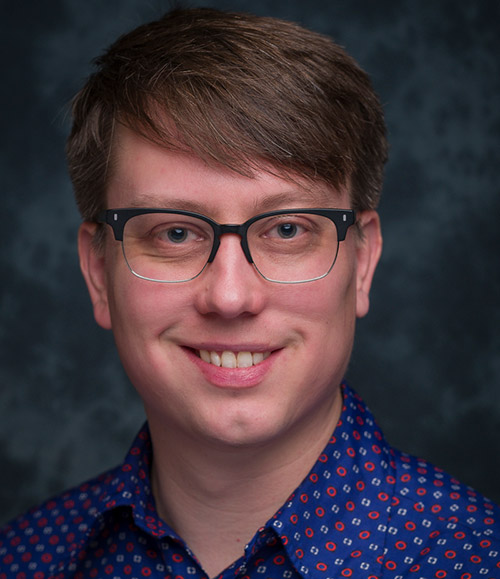 Mark Brandt, an associate professor of psychology at Michigan State University, began a five-month long fellowship with the Netherlands Institute for Advanced Study in the Humanities and Social Science (NIAS) in Amsterdam as part of the theme group studying adult belief change.
Known for providing a haven for free, critical, and independent scholarship, the NIAS promises their fellows a unique chance to “pause, rethink, and engage in open dialogue with colleagues from vastly different disciplines and contexts” in hopes that together, they can better navigate the global challenges of today.
Brandt joins the 2025-2026 cohort that represents 15 countries and spans a wide spectrum of disciplines in the humanities, social sciences, and the arts.
Together with Paul Vinod Khiatani, from The Hong Kong Polytechnic University, and Katerina Manevska, from Radboud University, Brandt will be working to better understand and predict when adults change their beliefs.
In their project statement, the theme group wrote, “Despite growing evidence, belief change in adulthood remains underexplored. This is largely because it challenges long-standing ideas that political attitudes are shaped early in life and remain stable over time. While some recent studies have shown that adults can change their beliefs, they often stop short of explaining when, why, or how this happens. We aim to fill that gap.”
As part of his project, Brandt will be examining how various threatening circumstances like the death of a loved one or losing a job, may or may not be associated with political attitude changes.
“What makes NIAS truly unique is the way it brings together scholars, journalists, and artists from around the world to learn from and inspire one another. The dedicated time and intellectual freedom it provides are rare opportunities,” said Brandt. “I’m looking forward to using this space to work with my collaborators and deepen our understanding of when and why adults change their political attitudes.”
At Michigan State, Brandt is an affiliated faculty member with Minority Politics, a joint group between the Political Science and Psychology departments.
His lab, The Belief Systems Lab, works to understand the causes and consequences of political, religious, and moral beliefs that may be leveraged to reduce conflict and promote a more fair, just, and free society. This includes studying how a wide range of real-life experiences predict stability and change in political preferences.