

Christophe Delay receives highly competitive National Institute of Health Award
May 29, 2026 - Shelly DeJong
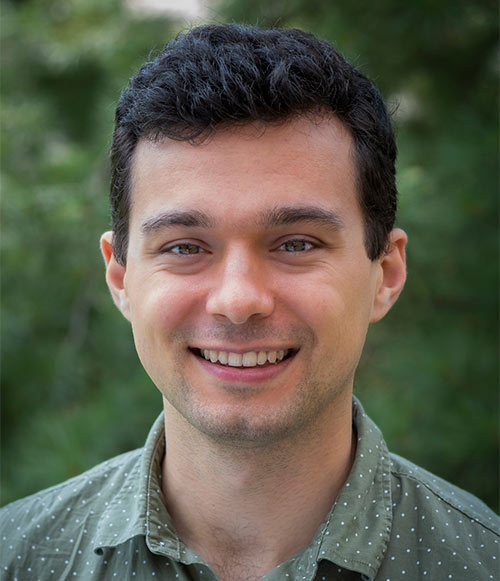 Congratulations to Christophe Delay a fifth-year graduate student in the Clinical Science research area in the MSU Department of Psychology, on being awarded the Ruth L. Kirschstein Predoctoral Individual National Research Service Award (NRSA F31). This competitive award is funded by the National Institute of Mental Health of the National Institutes of Health.
This award will allow Delay to fully focus on his studies and research as it pays his salary and research costs for the remainder of his PhD education.
"I am both humbled and immensely grateful to be selected as a recipient of this award. It validates the importance of my work on toxic stress mechanisms and affords me protected time to fully immerse myself in unpacking the links between daily stressors, perceived stress and physiological reactivity with mental health outcomes in college students,” said Delay. “Furthermore, this fellowship opens up time for additional training and coursework opportunities that fall outside my traditional PhD curriculum, allowing me to build the skills I need to become an independent scientist dedicated to studying toxic stress.”
Delay, who works in the Clinical Neuroscience Lab with advisor Dr. Katy Thakkar, is interested in how the autonomic nervous system, which controls the “fight or flight” response, interacts with how stressful a person feels a situation is. When dysregulated, these two factors can produce a toxic stress response: an intensified or prolonged activation of the body’s stress systems that begin to overwhelm the person’s ability to cope.
When a person experiences toxic stress again and again, it is thought to lead to cumulative wear and tear on the body and mind. This gradual damage is thought to contribute to the start of many mental and physical health problems like anxiety, depression, bipolar disorder, and schizophrenia, as well as elevated rates of heart disease.
“If we can better understand exactly how autonomic nervous system reactivity and stress perception combine to produce toxic stress, clinicians could move beyond one-size-fits-all care” says Delay.
For example, clinicians could pair a pupil light reflex test (a measure of autonomic nervous system reactivity) with a stress questionnaire about perceived stress. Together, these could better flag at-risk individuals earlier.
“Someone with high physical reactivity but low felt stress might then be guided toward learning to regulate body processes like heart rate, while someone with the opposite pattern might receive cognitive skills training like learning to reframe stressful thoughts,” said Delay. “By steering people toward the intervention that best fits their profile, clinicians could offer more effective, personalized care.”
MSU undergraduate students who are interested in participating in this study, please feel free to reach out to Christophe Delay at stressstudymsu@gmail.com. Those interested in joining the study team can also reach out to discuss further.