

PSY Spotlight with Student Researcher Megan Riley
June 15, 2026 - Shelly DeJong
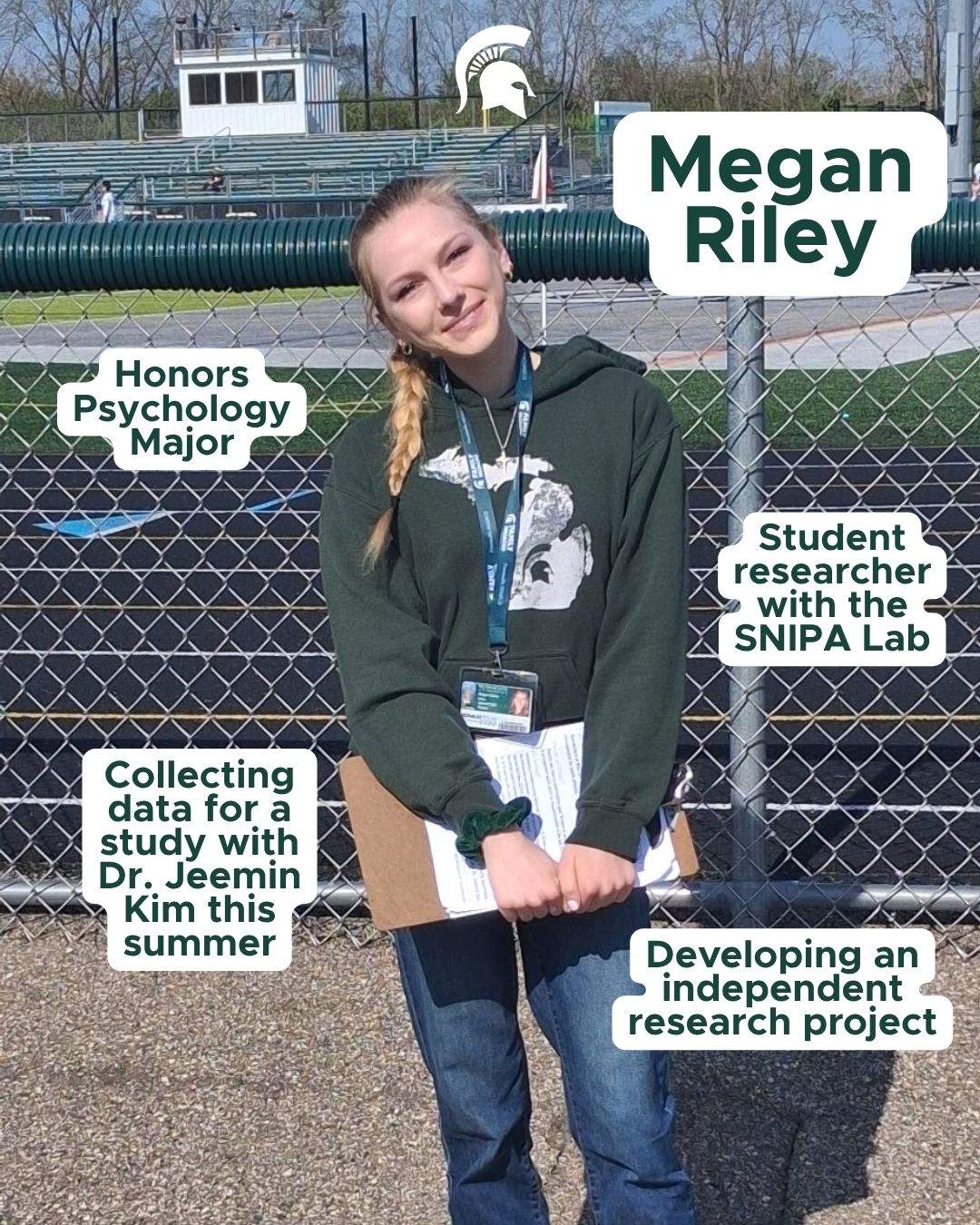 Meet Megan Riley, an Honors Psychology major with minors in Health Promotion and Human Behavior and Social Services. This summer, Megan is working as a research assistant to collect data for a study while also developing an independent research project.
Continue reading to see why this work is important to her and how it will help her in her future goals.
How are you using your psychology education this summer?
I'm continuing to work under my faculty mentor, Dr. Jeemin Kim, this summer and will be collecting data for a follow-up socio-normative intervention aimed at correcting misperceptions of parent conduct at youth sporting events.
As a member of his Socio‐Normative Influence in Physical Activity (SNIPA) research lab, I am involved in all stages of the current research study, including data collection, analysis, and preparation for presentation of findings. Having just taken PSY 295 Data Analysis in Psychological Research, I am applying the data analysis logic and work I learned to this current research project.
With my mentor’s guidance, I submitted a proposal to the American Psychological Association’s SUPER Fellowship as well and will be working on creating and submitting the necessary study proposal documents to conduct a qualitative study examining how adults living with chronic pain navigate physical activity and how social influence shapes their engagement.
Why did you want to work with this lab over the summer?
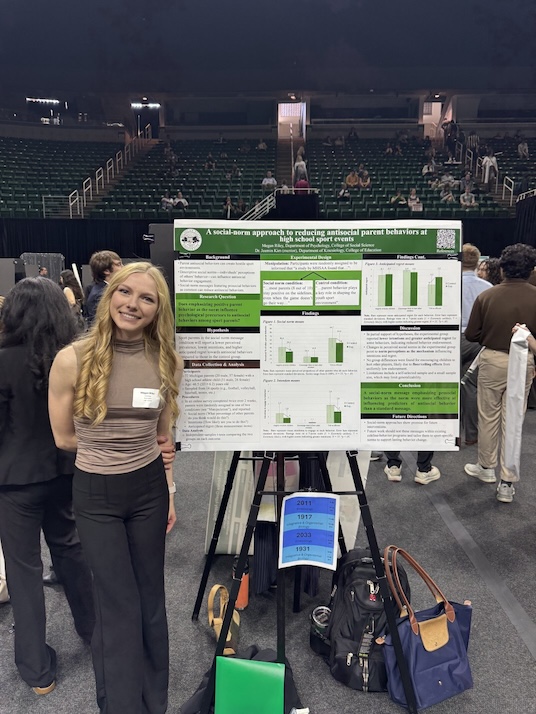
It is important to me to continue the mentorship, collaboration, and exposure to real research environments I gained this academic year into the summer. Developing my first independent research study with the research lab's guidance will provide foundational research experience and serve as the conceptual starting point for my future graduate work. Additionally, the data I'm helping collect pertains to the research poster I created and presented at UURAF so continuing to contribute to this research will help me see how the research process and findings deepen and develop through subsequent data collection and analysis.
 Do you have advice for others looking for an internship or job?
Finding a job or internship (paid or not) can be an intimidating and frustrating process. I would focus on examining your current working relations, as well as seeing where in your local area the career/field you're interested in is and contacting them asking about job shadowing opportunities just to get your foot in the door. Sometimes, you may not directly know of an opportunity, but someone within your circle might be able to get you in contact with someone related.
What else are you involved in at MSU?
MSU Psychology Scholar Program, MSU Social Science Scholars Program, MSU Clinical Psychophysiological Lab Research Assistant, Socio‐Normative Influence in Physical Activity (SNIPA) Research Lab Assistant, MSU Sport and Mental Performance Club President, Midwest Sport and Exercise Psychology Symposium (MSEPS) Attendee, University Undergraduate Research and Arts Forum (UURAF) Presenter
Give a shoutout to a PSY faculty or staff who has helped you on your journey at MSU so far.
I'd like to thank Sarah Handspike for facilitating the PSY Scholars Program in such a way that as a sophomore student focused on growth, having someone from the CSS Career Office come in to discuss resume and LinkedIn expectations was incredibly helpful and relevant. The workshop on career options with a PSY degree (both with and without graduate school) was also timely, since it's a concern at the forefront of my mind and it can be overwhelming to find trustworthy, concise information. Sarah Handspike has also been my academic counselor and her help with scheduling my classes and discussing degree plans has helped me as a student to trust my academic trajectory and efficacy within such a large university.
What are your future plans?
After graduation, I plan to pursue graduate education that offers research‑focused training and supports my goal of advancing psychologically informed approaches to chronic pain across diverse care settings.
My long-term goal is to become either a pediatric pain psychologist working in hospital based pain programs while also conducting research examining the cognitive‑affective mechanisms underlying chronic pain; or a career in academia focused on the psychology of injury and the integration of mental health care into the often isolating struggles associated with chronic pain, debilitating injuries, and life‑limiting illnesses. I am especially interested in how children and families navigate long‑term pain conditions, injury‑related distress, and the psychosocial challenges such as depression, anxiety, social isolation, identity disruption, and reduced quality of life that frequently co-occur with chronic health conditions.